
Comprehensive Guide to Allergy Testing in Dorchester: Symptoms, Sensitivities, and Diagnosis

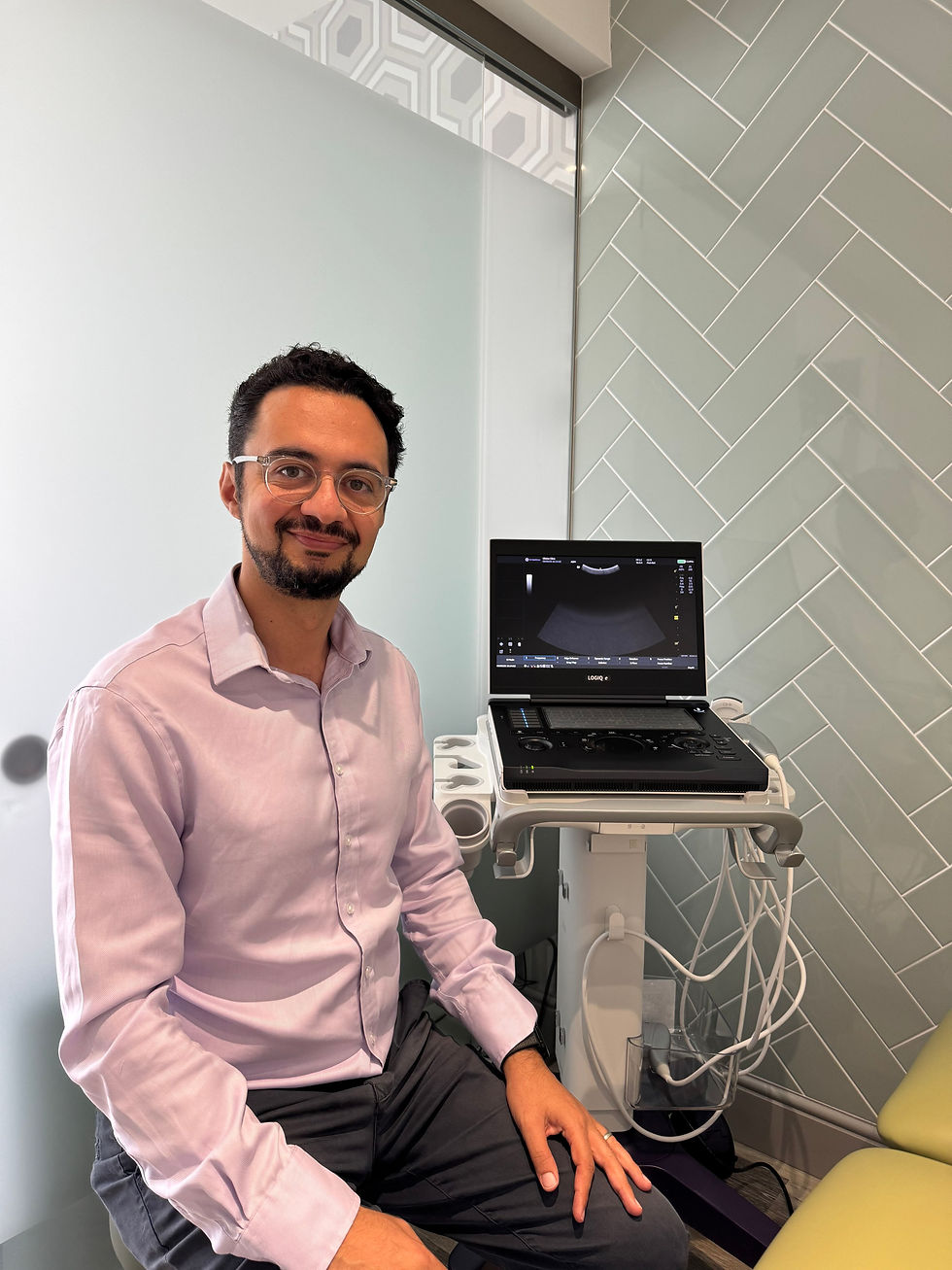
Medical Review: Dr Mehrdad Bordbar BMBS MMedSc MRCGP AFMCP GMC 7456052
Location: Olivine Clinic, 5 Hamslade Green, Poundbury, Dorchester, West Dorset, DT1 3DP
Date: 28 May 2026
The Bottom Line: Why Expert Allergy Assessment Matters
What is the best way to diagnose an allergy?

The most accurate and safe way to diagnose a suspected allergy is through a comprehensive clinical consultation with a medical professional, followed by targeted, evidence-based testing. At Olivine Clinic in Poundbury, Dorchester, we firmly believe that accurate allergy diagnosis requires more than just a quick online test.
We strongly advise against direct-to-consumer allergy testing kits. These untargeted tests often lead to false-positive results, resulting in unnecessary anxiety and highly restrictive, potentially harmful diets.
Instead, our private GP practice, led by Dr Mehrdad Bordbar, focuses on a safe, doctor-led approach. By taking a detailed medical history first, we can determine whether your symptoms are due to a true allergy or a sensitivity, and subsequently arrange the correct, specific Immunoglobulin E (IgE) blood test panels or refer you to an allergy specialist for skin prick or patch testing if indicated.
If you are struggling with unexplained rashes, respiratory issues, or severe reactions to food, professional medical guidance is essential to ensure your safety and well-being.
What Are Allergies and What Symptoms Do They Cause?
An allergy occurs when your body’s immune system reacts abnormally to a substance—known as an allergen—that is typically harmless to most people. When exposed to an allergen, your immune system produces antibodies that trigger the release of chemicals like histamine, leading to various physical symptoms.
The presentation of an allergy depends heavily on how you were exposed to the allergen (e.g., inhaling, eating, or touching it) and the severity of your immune response. Here are the most common allergic conditions and their associated symptoms:
1. Allergic Rhinitis and Rhinoconjunctivitis
Commonly known as "hay fever" when triggered by pollen, allergic rhinitis is inflammation of the inside of the nose caused by an allergen. When it also affects the eyes, it is termed rhinoconjunctivitis.
Common Symptoms: Sneezing, a runny or blocked nose, an itchy palate, and red, itchy, or watery eyes.
Common Triggers: Tree and grass pollens, house dust mites, and pet dander.
2. Allergic Asthma
For many patients, asthma is directly linked to allergies. Inhaling an allergen can trigger an immune response that causes the airways to narrow, swell, and produce extra mucus.
Common Symptoms: Wheezing, shortness of breath, chest tightness, and a persistent cough, particularly at night or early in the morning.
Common Triggers: Perennial indoor allergens like mould spores, dust mites, and animal hair.
3. Atopic Dermatitis (Eczema)
Atopic dermatitis is an inflammatory skin condition highly associated with the allergic triad (asthma, allergic rhinitis, and eczema). While it is a chronic condition, flare-ups are frequently triggered by environmental allergens or irritants.
Common Symptoms: Dry, red, intensely itchy, and cracked skin, predominantly in the creases of the elbows, knees, and neck.
4. Suspected Food Allergies
Food allergies can provoke immediate and severe reactions. Unlike food intolerances (which we will discuss later), true food allergies involve the immune system and can affect multiple organs.
Mild to Moderate Symptoms: Urticaria (hives, which are itchy, raised welts on the skin), tingling in the mouth, or abdominal pain.
Severe Symptoms: Angioedema (deep tissue swelling, often around the eyes, lips, and face) and anaphylaxis. Anaphylaxis is a severe, life-threatening allergic reaction that causes a sudden drop in blood pressure and narrowing of the airways, requiring emergency administration of adrenaline (epinephrine).
5. Allergy to Insect Venom
Stings from insects such as bees, wasps, and hornets can cause severe allergic reactions in some individuals.
Common Symptoms: Extensive swelling at the site of the sting, generalised hives, and, in severe cases, life-threatening anaphylaxis.
6. Latex Allergy
Proteins found in natural rubber latex can cause allergic reactions in susceptible people, particularly healthcare workers or those who have undergone multiple surgeries.
Common Symptoms: Skin redness, hives, itching, and respiratory symptoms if latex powder is inhaled.
7. Drug Allergies (e.g., Penicillin)
Certain medications, most notably antibiotics like penicillin, can trigger allergic reactions. It is crucial to distinguish between a true drug allergy and an expected medication side effect (like nausea).
Common Symptoms: Hives, rash, facial swelling, wheezing, and anaphylaxis.
Understanding the Four Types of Hypersensitivity Reactions
To understand how allergy testing works, it is helpful to understand how the immune system behaves. Medical science categorises hypersensitivity (immune overreactions) into four distinct types, labelled Type I to Type IV.
Type I (Immediate Hypersensitivity): This is what we typically think of as a "true allergy." It is mediated by Immunoglobulin E (IgE) antibodies. When exposed to an allergen (like a peanut or pollen), the immune system triggers mast cells to release histamine almost immediately. This causes rapid symptoms ranging from hives to anaphylaxis.
Type II (Cytotoxic Hypersensitivity): In this reaction, antibodies mistakenly target healthy cells in the body, leading to cell destruction. An example of this is a mismatched blood transfusion reaction.
Type III (Immune Complex-Mediated Hypersensitivity): This occurs when antibodies bind to allergens to form "complexes." These complexes can become lodged in tissues (like joints or kidneys), causing intense inflammation. Examples include lupus or serum sickness.
Type IV (Delayed Hypersensitivity): Unlike Type I, this reaction is not mediated by antibodies, but rather by T-cells. It is a delayed response, typically occurring 48 to 72 hours after exposure. The classic example is allergic contact dermatitis, such as a rash developing days after wearing a nickel belt buckle or touching poison ivy.
Understanding these classifications is vital because different types of hypersensitivity require entirely different diagnostic tests.
True Allergies vs. Sensitivities and Intolerances

One of the most frequent reasons patients visit us at Olivine Clinic is to discuss uncomfortable gut symptoms such as bloating, diarrhoea, abdominal cramping, and acid reflux. Many patients naturally assume these symptoms indicate a food allergy. However, there is a distinct clinical difference between a true allergy and a sensitivity (or intolerance).
True Food Allergies
As mentioned above, a true food allergy is an immune system response (typically Type I IgE-mediated). Even a microscopic amount of the offending food (like a trace of a peanut) can trigger a severe, sometimes life-threatening reaction. The symptoms usually occur rapidly, within minutes to a few hours of ingestion.
Sensitivities and Intolerances
A food intolerance or sensitivity, however, is a digestive system response. It means your body struggles to break down a certain food, often due to a lack of specific digestive enzymes.
Lactose Intolerance: Caused by a deficiency in the enzyme lactase, leading to bloating, flatulence, and diarrhoea after consuming dairy.
Non-Coeliac Gluten Sensitivity: Patients experience IBS-like symptoms, brain fog, and joint pain after eating gluten, despite testing negative for Coeliac disease (an autoimmune condition) and wheat allergy.
If your primary symptoms are gut-related (bloating, reflux, altered bowel habits) without the presence of hives, lip swelling, or breathing difficulties, you are likely experiencing a dietary intolerance or a condition like Irritable Bowel Syndrome (IBS), rather than a true IgE-mediated food allergy. Understanding this distinction ensures we pursue the right diagnostic pathway, saving you time, money, and unnecessary dietary restrictions.
Types of Allergy Testing: A Clinical Breakdown

Choosing the correct allergy test depends entirely on the patient's medical history. Below is a breakdown of the established diagnostic methods recognised by the British Society for Allergy & Clinical Immunology (BSACI) and the National Institute for Health and Care Excellence (NICE).
1. Skin Prick Testing (SPT)
Where it is appropriate: Skin Prick Testing is the first-line in vivo (on the body) test for diagnosing Type I IgE-mediated allergies, such as allergic rhinitis, asthma, immediate food allergies, insect venom, and latex allergies.
How it works: A drop of a purified allergen extract is placed on the forearm, and the skin is lightly pricked through the drop. If you are allergic, a localised, raised, itchy bump (a wheal) will appear within 15 to 20 minutes.
Clinical Considerations: * Patients must stop taking antihistamines for several days prior to the test.
It requires clear, intact skin (it cannot be performed over active eczema).
Because SPT involves introducing a suspected allergen into the body, it carries a small risk of inducing a severe allergic reaction. Therefore, clinical guidelines dictate that SPT must only be performed in a specialist setting equipped for immediate anaphylaxis management. For this reason, if Dr Bordbar assesses that SPT is the most appropriate next step, we will arrange a referral to a trusted secondary care allergy specialist.
2. Patch Testing
Where it is appropriate: Patch testing is the gold standard for diagnosing Type IV delayed hypersensitivity reactions, specifically allergic contact dermatitis or occupational dermatitis (e.g., rashes caused by metals, fragrances, or hair dyes).
How it works: Small amounts of potential allergens are applied to the back under adhesive patches. The patches remain in place for 48 hours, and the skin is read at 48 hours and again at 72–96 hours.
Clinical Considerations: * Patch testing is entirely distinct from Skin Prick Testing and is not used to diagnose immediate food or respiratory allergies.
Like SPT, patch testing is highly specialised and is predominantly carried out in specialist dermatology or allergy clinics. If your history indicates contact dermatitis, Olivine Clinic will facilitate the appropriate referral.
3. Specific IgE Blood Testing (Available at Olivine Clinic)
Where it is appropriate: Blood tests measuring specific IgE (sIgE) antibodies are incredibly valuable when Skin Prick Testing is unsuitable (e.g., if a patient has severe widespread eczema, cannot stop antihistamines, or is at a very high risk of anaphylaxis).
How it works: A standard blood draw is taken and sent to our partner laboratories. The blood is analysed to see if it contains IgE antibodies targeting specific allergens.
The Importance of Specificity: We do not believe in randomly testing for hundreds of random allergens without a clinical reason. Instead, based on your consultation, Dr Bordbar will select highly specific panels. At Olivine Clinic, we offer targeted specific IgE blood panels including:
Food and Inhalants Profile (Ideal for mixed respiratory and dietary symptoms)
Nuts and Seeds Panel
Shellfish Panel
Cereals Panel
Milk Proteins and Dairy Panel
Stone Fruit Panel
Antibiotics / Drugs Profile
Insects Panel
Gluten Sensitivity Testing (Alongside Coeliac screening)
Atopic Dermatitis Eczema Profile
Allergic Rhinitis and Asthma Profile
4. The ALEX3 Multiplex Panel
Where it is appropriate: The ALEX3 test (Component-Resolved Diagnosis or CRD) is a highly advanced, in vitro multiplex blood test. From a single sample, it can test for up to 295 allergen extracts and specific molecular components.
When it is used: According to NICE (DG24) and the BSACI, multiplex testing is not recommended for routine, primary-care screening. Instead, it adds value in complex, diagnostically ambiguous cases. For example, it is excellent for distinguishing between a "genuine" dangerous food allergy (like a peanut allergy mediated by the Ara h 2 protein) and a milder cross-reaction caused by pollen-food allergy syndrome.
Clinical Considerations: The ALEX3 test detects sensitisation, not necessarily clinical allergy. A patient may test positive for a protein but have no symptoms when they eat the food. Because of the high risk of false-positive results in multi-sensitised individuals, results must be interpreted with extreme caution. Dr Bordbar can arrange the ALEX3 test for complex cases, ensuring that the results are analysed carefully against your real-world symptoms.
Summary Comparison of Allergy Tests
Feature | Skin Prick Test (SPT) | Patch Test | Specific IgE Panels | Multiplex Panel (ALEX3) |
Hypersensitivity Type | Type I (Immediate) | Type IV (Delayed) | Type I (Immediate) | Type I (Molecular profiling) |
Sample Type | In vivo (Skin wheal) | In vivo (Skin occlusion) | In vitro (Blood) | In vitro (Blood) |
Read Time | 15–20 minutes | 48–96 hours | Days (Lab result) | Days (Lab result) |
Primary Use | Rhinitis, asthma, food, venom, latex | Contact & occupational dermatitis | Targeted assessment of specific suspected triggers | Complex multi-sensitisation & component-resolved diagnosis |
Antihistamine Stop? | Required | Not required | Not required | Not required |
Why Direct-to-Consumer Testing is Unsafe and Unreliable
In recent years, the market has been flooded with direct-to-consumer "allergy and intolerance tests," frequently utilising unproven methods like IgG testing or hair analysis.
At Olivine Clinic, we have a firm policy against "direct-to-testing" pathways without a prior medical consultation. Here is why:
High Risk of False Positives: Many over-the-counter tests flag sensitivities that have no clinical relevance. A positive result does not mean you have an allergy; it often just means your immune system has recognised the food because you eat it regularly.
Unnecessary Diets: Over-diagnosis leads patients to completely eliminate essential food groups. This causes nutritional deficiencies, significant weight changes, and heavily impacts social and psychological well-being.
Increased Anxiety: Misinterpreting an irrelevant positive result on a multiplex panel can cause profound and unnecessary fear of anaphylaxis.
Missing the Real Issue: Focussing on a false-positive food "allergy" can delay the diagnosis of a real underlying condition, such as inflammatory bowel disease, coeliac disease, or a separate autoimmune issue.
Our clinic champions a safe, evidence-based approach: Consultation first, testing second.
The Olivine Clinic Approach: Expert Doctor-Led Care
At Olivine Clinic, located in the heart of Poundbury, Dorchester, your health and safety are our utmost priorities. We offer a holistic, "whole-person" approach to diagnostics, blending conventional general practice with functional medical insights.
Step 1: The Clinical History
When you book an appointment, you will sit down with Dr Mehrdad Bordbar, a GMC-registered GP operating within our CQC-regulated clinic. Dr Bordbar will conduct an unhurried, comprehensive assessment of your symptoms, family history, diet, and lifestyle to determine if an allergic pathway is the true root cause of your concerns.
Step 2: Targeted Testing or Referral
If blood testing is clinically indicated, we can draw your blood on-site and arrange specific IgE testing for the targeted panels mentioned above (such as environmental, nuts, milk, or the ALEX3 panel for complex cases).
If your history strongly indicates the need for in vivo testing—such as Skin Prick Testing for suspected immediate food anaphylaxis, or Patch Testing for complex contact dermatitis—Dr Bordbar will provide a precise, detailed referral to an appropriate secondary care allergy specialist.
Step 3: A Clear Management Plan
Once your results are back, Dr Bordbar will review them with you in the context of your real-life symptoms. We will provide a sensible, medically sound management plan, which may include prescribing emergency medication (like an adrenaline auto-injector), arranging nutritional support, or providing lifestyle advice for allergen avoidance.
Next Steps: Book Your Private GP Consultation
If you are experiencing unexplained allergic symptoms, persistent gut issues, or require clarity on a suspected food sensitivity, do not leave it to guesswork or unreliable online tests.
Take the first step toward clearer answers and better long-term health by booking a private consultation at Olivine Clinic today.
Ready to understand your symptoms? Contact Olivine Clinic in Poundbury, Dorchester, to arrange a comprehensive consultation with Dr Bordbar.
Phone: 01305 602 959
Location: 5 Hamslade Green, Poundbury, Dorchester, DT1 3DP
Book Online: Visit our website to schedule your face-to-face appointment.
Disclaimer: The information provided in this article is for educational purposes only and does not constitute medical advice. Allergy testing must always be interpreted by a qualified healthcare professional. If you are experiencing symptoms of anaphylaxis, such as difficulty breathing or swelling of the face and throat, please call 999 or attend your nearest Accident and Emergency department immediately.


Comments