
Private Joint Injections in Poundbury, Dorchester: What to Expect at Olivine Clinic

Medical Review By: Dr Mehrdad Bordbar BMBS MMedSc MRCGP AFMCP Last Updated: 18 April 2026 Location: Olivine Clinic, 5 Hamslade Green, Dorchester, DT1 3DP
Introduction: The Bottom Line on Joint Injections
What is a joint injection? A joint injection is a minimally invasive medical procedure where a medication—typically a corticosteroid (anti-inflammatory) mixed with a local anaesthetic—is injected directly into a joint space or surrounding soft tissue. The primary goal is to rapidly reduce inflammation, alleviate chronic or acute pain, and restore mobility for conditions such as osteoarthritis, bursitis, and tendinopathy.
For patients living with chronic musculoskeletal pain in West Dorset, securing a timely, unhurried, and highly accurate joint injection can be life-changing. At Olivine Clinic in Poundbury, Dorchester, Dr Mehrdad Bordbar offers a premium, patient-centred approach to joint and soft tissue injections.
Unlike standard fast-tracked appointments, our protocol revolves around a luxury 60-minute consultation. This ensures precision through Point of Care Ultrasound (PoCUS), unparalleled safety, and comprehensive aftercare. If you are considering a private joint injection, this guide details the exact step-by-step process of what to expect during your appointment.
Why Choose a Private GP for Joint Injections in West Dorset?

In today's fast-paced healthcare environment, time is a rare commodity. In the NHS, a standard GP appointment is often limited to 10 minutes, which makes carrying out comprehensive assessments, discussing complex options, and performing intricate, ultrasound-guided procedures incredibly challenging.
What Patients Love About the Olivine Clinic Approach:
The Luxury of Time: Patients consistently tell us that their appointment at Olivine Clinic is the longest they have ever spent with a doctor. A full 60-minute slot is standard for our injection appointments.
A Relaxed, Unrushed Environment: This ample time allows you to ask every question you have, clarify uncertainties, and express your anxieties without feeling ushered out the door.
Precision and Safety: Rushed procedures are a primary cause of procedural anxiety and suboptimal outcomes. Having an hour means the injection is planned and executed safely, meticulously, and precisely.
Comprehensive Aftercare: Many clinics miss the vital step of post-procedure advice. At Olivine Clinic, we dedicate significant time to your rehabilitation pathway, which is clinically proven to lead to better long-term outcomes.
Advanced Ultrasound Guidance: We utilise PoCUS (Point of Care Ultrasound) for assessment and guidance. This increases the accuracy of the injection, reduces discomfort, and drastically improves the safety profile of the procedure compared to traditional "blind" landmark-guided injections.
Step-by-Step: Your Joint Injection Journey at Olivine Clinic
Understanding the clinical pathway can significantly reduce any pre-procedure anxiety. Here is exactly what happens when you book a joint injection at our Poundbury clinic.
1. Seamless Online Booking and Confirmation
The journey to pain relief begins from the comfort of your own home. Our streamlined online booking system allows you to select a time that fits your schedule. Upon booking, you will immediately receive a comprehensive confirmation email. This email includes all logistical details, directions to Olivine Clinic at 5 Hamslade Green, Dorchester, and preliminary information on how to prepare for your appointment.
2. The 60-Minute Consultation
When you arrive at Olivine Clinic, you will be seen during your dedicated 1-hour slot. This is not a waiting room conveyor belt. From the moment you sit down with Dr Bordbar, the focus is entirely on your medical history, your symptoms, and how your joint pain is impacting your daily quality of life.
3. Full History, Physical Examination, and PoCUS Assessment
Before any needles are drawn, a rigorous clinical assessment takes place.
Medical History: Dr Bordbar will review your past medical history, current medications (especially blood thinners), allergies, and previous treatments.
Physical Examination: A thorough orthopaedic examination of the affected joint to assess range of motion, swelling, and specific pain points.
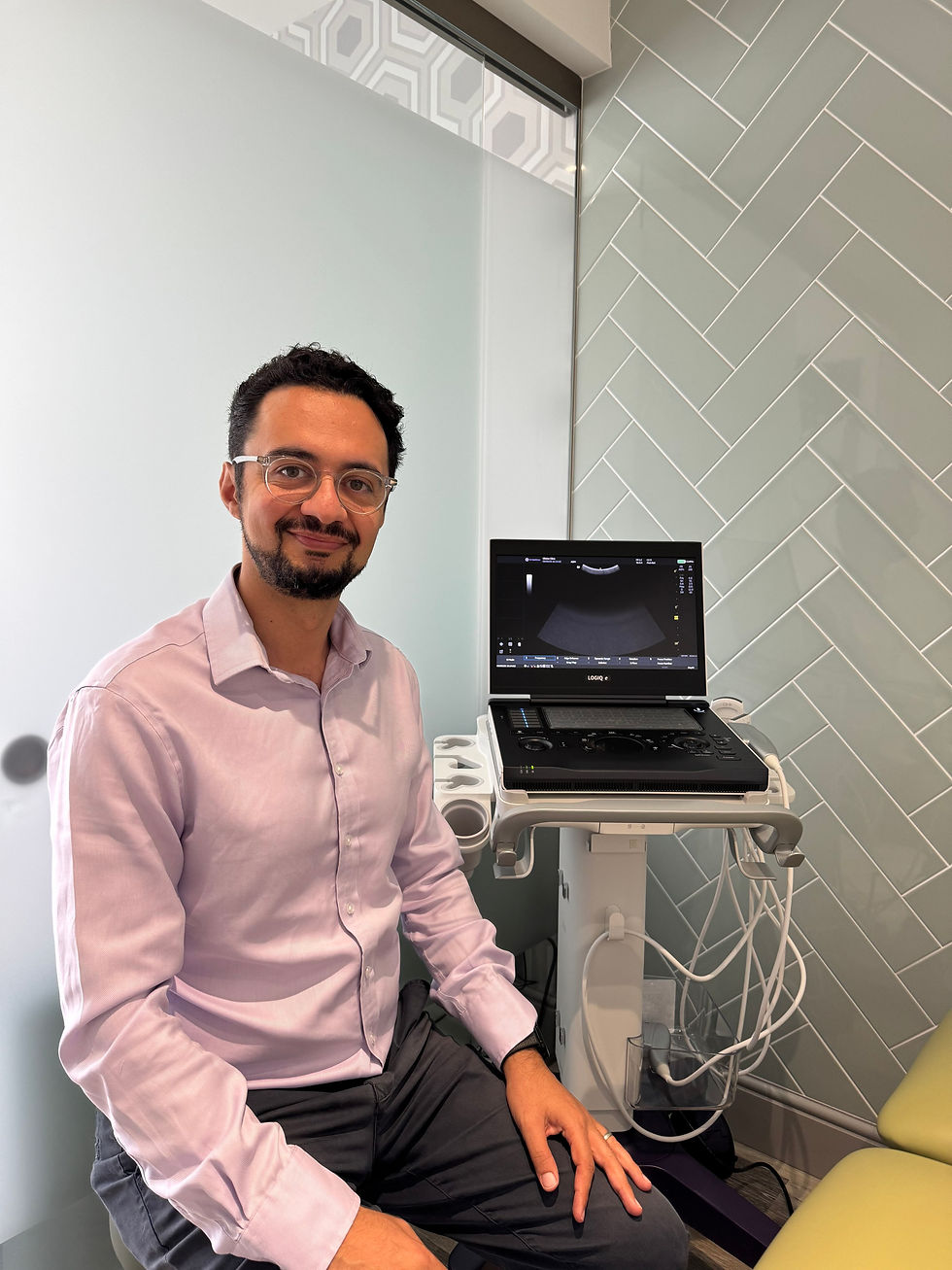
Point of Care Ultrasound (PoCUS): This is where modern medicine shines. Dr Bordbar will use a high-resolution ultrasound machine to look inside your joint in real-time. This provides invaluable additional information. We can visualise fluid build-up (effusions), tendon tears, degree of arthritis, and exact anatomical structures, ensuring that an injection is genuinely the correct course of action.
4. Transparent Discussion on Options, Approaches, and Safety
Informed patients make the best health decisions. Dr Bordbar will discuss the findings from the physical and ultrasound examinations. You will have a comprehensive discussion regarding:
Injection Options: Discussing the type of medication to be used (e.g., corticosteroid and local anaesthetic, hyaluronic acid).
Alternative Therapies: Following NICE (National Institute for Health and Care Excellence) guidelines, we will discuss conservative measures such as physiotherapy, weight management, and oral analgesics.
Safety Profile: A frank, jargon-free discussion about the potential risks (such as infection, skin depigmentation, or temporary flare-ups) and the expected benefits.
5. Informed Consent
Once you have had ample time to ask questions and are comfortable with the proposed treatment plan, you will be asked to sign a comprehensive consent form. This documentation ensures you fully understand the procedure, the expected outcomes, and the potential (though rare) side effects.
6. The Procedure: Aseptic Technique and Ultrasound Guidance
The injection itself is performed with the utmost care.
Aseptic Technique: Patient safety is paramount. The skin is rigorously cleaned with hospital-grade antiseptics to prevent infection. Sterile gloves, needles, and syringes are used throughout.
Ultrasound Guidance: Rather than relying solely on touch and anatomical landmarks, Dr Bordbar frequently uses ultrasound guidance to perform the injection. Watching the needle enter the exact target space on the monitor ensures the medication is delivered precisely where it is needed. This vastly improves the efficacy of the medication and minimises pain during the injection by avoiding nerves and healthy tissues.
7. Extensive Post-Injection Advice and Written Clinical Letter
The appointment does not end when the needle is removed.
Verbal Advice: Dr Bordbar will provide detailed instructions on how to care for the joint over the next 48 hours (e.g., resting the joint, applying ice, and modifying activities).
Written Summary: You will not be left trying to remember what was said. A full written clinic letter summarising the entire consultation, the findings of the ultrasound, the details of the injection, and personalised aftercare instructions will be securely emailed to you for your review and records.
8. Open Appointment for Reassessment
Recovery is a dynamic process. We operate an open-door policy. Should you experience any unexpected issues, heightened pain, or if you simply require reassurance, you have an open avenue to book a reassessment with Dr Bordbar. Your continuity of care is guaranteed.
Conditions We Treat with Joint and Soft Tissue Injections
Joint injections are highly versatile and can treat a wide array of painful musculoskeletal conditions. At Olivine Clinic, we specialise in the following areas:
1. Knee Injections (Osteoarthritis)
The knee is the largest hinge joint in the body and bears massive loads, making it highly susceptible to wear and tear. Osteoarthritis of the knee involves the degradation of the protective cartilage. When this joint becomes inflamed (synovitis), it can cause debilitating pain and swelling. A targeted corticosteroid injection into the intra-articular space of the knee can drastically reduce inflammation, providing a window of pain relief that allows patients to engage in essential physiotherapy and strengthening exercises as recommended by the British Orthopaedic Association.
2. Shoulder Pain (Rotator Cuff & Frozen Shoulder)
Shoulder dysfunction can severely limit your independence, affecting everything from dressing to driving.
Subacromial Bursitis / Rotator Cuff Tendinopathy: Inflammation of the bursa (a fluid-filled sac) or the tendons under the roof of the shoulder. An ultrasound-guided injection into the subacromial space can rapidly alleviate this "pinching" pain.
Frozen Shoulder (Adhesive Capsulitis): A painful and stiff shoulder condition. Early-stage joint injections into the glenohumeral joint can interrupt the inflammatory phase, cutting months off the recovery time.
3. Base of Thumb Osteoarthritis
The carpometacarpal (CMC) joint at the base of the thumb is vital for our pinch grip. Unfortunately, it is a very common site for osteoarthritis, particularly in women over 50. Pain here makes opening jars, turning keys, and writing agonizing. Because the joint space is incredibly small, ultrasound guidance is particularly crucial here to ensure the medication is deposited accurately inside the capsule without damaging the surrounding sensory nerves.
4. Trochanteric Bursitis (Hip Pain)
Greater Trochanteric Pain Syndrome (GTPS), commonly known as trochanteric bursitis, presents as sharp or aching pain on the outside of the hip. It is notoriously disruptive to sleep, as patients cannot lie on the affected side. An injection into the inflamed bursa over the greater trochanter of the femur can provide rapid relief, allowing patients to sleep through the night and walk without a limp.
5. Golfer’s and Tennis Elbow (Epicondylitis)
Tennis Elbow (Lateral Epicondylitis): Pain on the outside of the elbow caused by micro-tears and inflammation of the extensor tendons.
Golfer’s Elbow (Medial Epicondylitis): Similar pathology, but affecting the flexor tendons on the inside of the elbow. While these are common sports injuries, they are frequently caused by repetitive strain from computer use, gardening, or manual labor. An injection around the tendon origin can dampen the severe inflammatory response.
6. Trigger Finger (Stenosing Tenosynovitis)
Trigger finger occurs when the flexor tendon sheath in the finger becomes inflamed and thickened. This causes the tendon to catch or lock as it glides through the A1 pulley at the base of the finger, resulting in a painful "snapping" sensation. A precise injection of a tiny amount of steroid around the tendon sheath is highly effective at reducing the swelling, allowing the tendon to glide smoothly once again.
7. De Quervain’s Tenosynovitis
This painful condition affects the tendons on the thumb side of the wrist. It is incredibly common in new mothers (often called "Mummy Thumb") due to the repetitive lifting of infants, as well as in racket sports players. The pain is usually exacerbated by forming a fist or grasping objects. An ultrasound-guided injection into the first dorsal compartment of the wrist can resolve the inflammation and restore pain-free movement.
The Olivine Clinic Difference: Expertise You Can Trust
When you are allowing someone to inject medication into your joints, credentials, training, and ongoing education matter immensely.
About Dr Mehrdad Bordbar BMBS MMedSc MRCGP AFMCP Dr Bordbar is a highly experienced Private GP who blends robust traditional medical training with a progressive approach to patient care. His qualifications reflect a deep commitment to general practice, medical science, and functional medicine.
To ensure Olivine Clinic continues to offer the absolute gold standard in musculoskeletal (MSK) care, Dr Bordbar is dedicated to continuous professional development. In April and May 2026, he is undertaking two highly advanced, specialised courses in London with the prestigious Sports Medicine Ultrasound Group (SMUG):
Introduction to MSK Ultrasound
Ultrasound Guided MSK Injections (Upper & Lower Limb)
Why does this matter to you? These are not standard weekend seminars. These intensive courses are internationally recognised and accredited by leading medical bodies, including:
The Royal College of Radiologists (RCR)
European Society of Musculoskeletal Radiology (ESSR)
The Faculty of Sport and Exercise Medicine UK (FSEM UK)
By mastering the latest imaging and interventional techniques endorsed by the Royal College of Radiologists and the FSEM, Dr Bordbar ensures that every patient in Dorchester receives care that rivals the top sports medicine clinics in London. Ultrasound guidance is fast becoming the mandatory gold standard for joint injections, and Dr Bordbar’s active participation in these SMUG programs guarantees that Olivine Clinic is at the cutting edge of safe, precise, and effective pain management.
Frequently Asked Questions (FAQs) About Joint Injections
Does a joint injection hurt? Most patients describe a joint injection as uncomfortable rather than painful. We use a local anaesthetic both to numb the skin and mixed in with the steroid to provide immediate numbing within the joint. By using ultrasound guidance, Dr Bordbar can avoid sensitive structures, making the procedure much more comfortable than blind injections.
How long does it take for a joint injection to work? The local anaesthetic provides immediate relief that lasts for a few hours. The corticosteroid (the anti-inflammatory medication) typically takes between 48 to 72 hours to begin working, with maximum benefit often felt between one to two weeks post-injection.
How long will the pain relief last? The duration of relief varies wildly depending on the severity of the underlying condition, the specific joint, and the patient's lifestyle. For some, a single injection provides months of relief. For conditions like Trigger Finger or De Quervain's, an injection can be entirely curative. For chronic conditions like osteoarthritis, the relief may last anywhere from 3 to 6 months.
Are there any side effects? Joint injections are generally very safe. The most common side effect is a "steroid flare"—a temporary increase in pain in the joint for 24-48 hours after the injection as the crystal suspension settles. Rare risks include infection, thinning of the skin or fat at the injection site, and temporary changes in blood sugar levels for diabetic patients. All risks will be thoroughly discussed during your 60-minute consultation.
Can I drive home after my appointment? For upper limb injections (shoulder, elbow, hand), you can generally drive yourself home. However, if you are having a knee or hip injection, the local anaesthetic may make your leg feel temporarily weak or numb. For safety reasons, we strongly advise arranging for someone to drive you home from the clinic in Dorchester.
Next Steps: Reclaim Your Mobility Today
Living with chronic joint pain is exhausting. It drains your energy, disrupts your sleep, and keeps you from doing the things you love. At Olivine Clinic, you do not have to accept pain as a standard part of ageing or injury.
With our luxury 1-hour appointments, advanced ultrasound technology, and Dr Bordbar's accredited expertise, you are guaranteed a safe, unhurried, and highly effective treatment plan.
Ready to get back to living pain-free? Contact Olivine Clinic today to book your comprehensive joint assessment. 📍 Visit us: 5 Hamslade Green, Poundbury, Dorchester, DT1 3DP 💻 Book Online: Secure your 60-minute consultation via our website.
Disclaimer: The information provided in this article is for educational purposes only and does not substitute for professional medical advice, diagnosis, or treatment. Always seek the advice of your physician or other qualified health providers with any questions you may have regarding a medical condition. Do not disregard professional medical advice or delay in seeking it because of something you have read on this website.


Visiting a Walk-In Private GP Clinic in Surrey turned out to be a really positive experience. I was seen quickly, and the doctor made sure I fully understood my diagnosis and treatment plan. https://primahealth.uk/