
Advanced Prostate Cancer Screening in Dorchester: Beyond the Standard PSA Test

For men seeking the most reliable and accurate prostate cancer screening in Dorchester, Olivine Clinic offers the Stockholm3 test—an advanced, risk-based blood test that surpasses traditional methods. The bottom line: Unlike the standard NHS PSA test, which often misses aggressive cancers or causes unnecessary false alarms, Stockholm3 uses a sophisticated algorithm combining protein markers, genetic data, and clinical information to accurately identify aggressive prostate cancer.
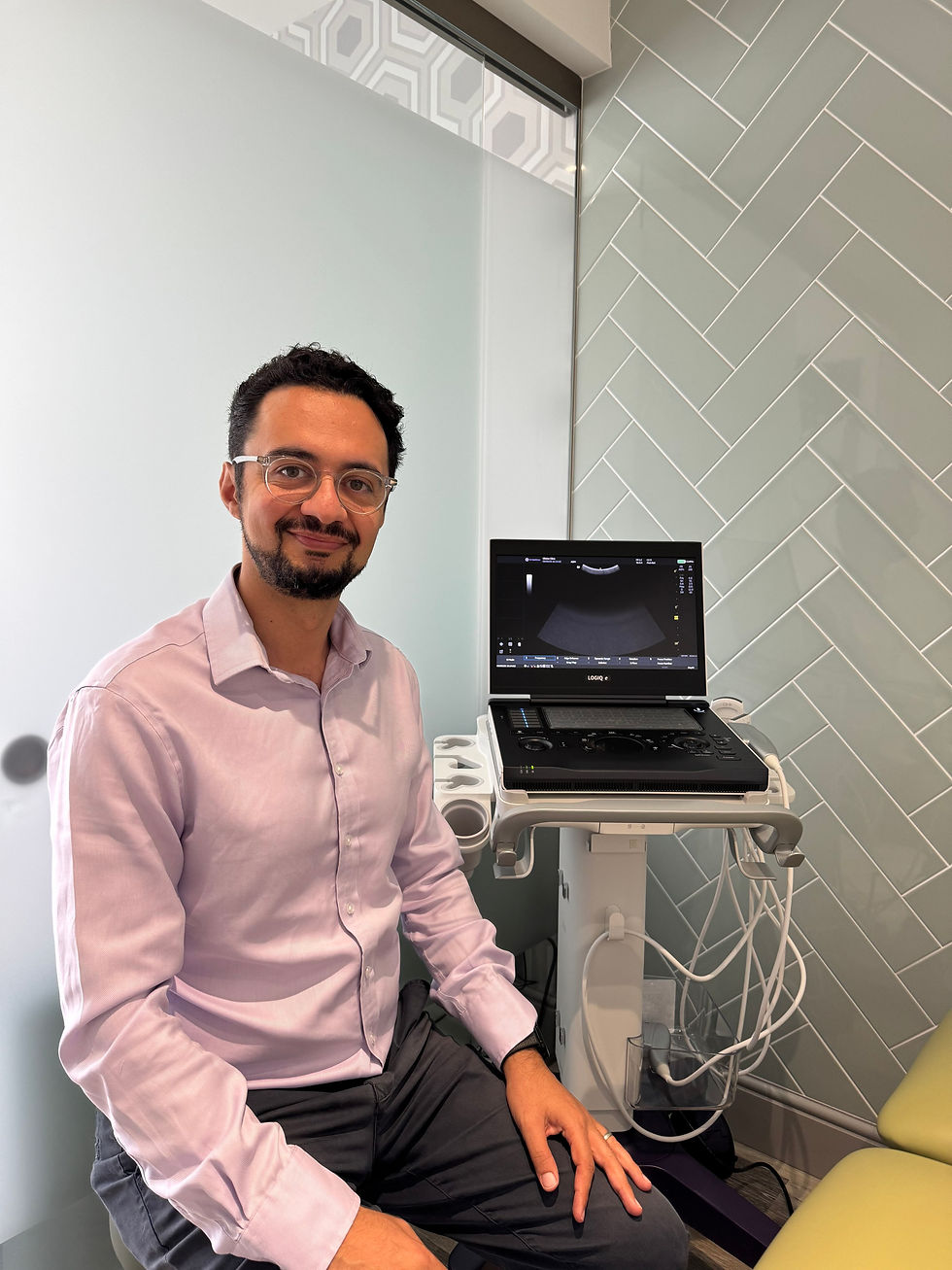
Under the expert care of Dr Mehrdad Bordbar at our private GP practice in Poundbury, we are proud to take men’s health assessments to the next level, ensuring dangerous cancers are detected early while protecting you from the anxiety and physical toll of unnecessary medical investigations.
Understanding Prostate Cancer and the Need for Early Detection

Prostate cancer is the most common cancer among men in Europe. Because the prostate gland is buried deep within the pelvis, early-stage tumours rarely cause noticeable problems. As prostate cancer is typically symptom-free until it spreads, testing needs to happen before symptoms develop.
Waiting for symptoms—such as difficulty urinating, pelvic pain, or blood in the urine—often means the cancer has progressed. Early identification of aggressive prostate cancer is essential to improve long-term outcomes and avoid late-stage diagnosis. The goal of any modern screening programme is to detect aggressive cancers earlier, when they are still highly curable.
However, detecting the disease accurately without causing harm has been a long-standing challenge for healthcare systems worldwide, including the NHS.
The NHS Approach: The Traditional PSA Test and its Limitations
Currently, the UK National Screening Committee does not recommend a routine, national screening programme for prostate cancer. This decision, reaffirmed in recent years, is primarily due to the unreliability of the standard Prostate-Specific Antigen (PSA) blood test. While PSA-based screening has improved early detection of prostate cancer, it also has recognised limitations.
For decades, standard practice has relied on checking if a man's PSA level is above a commonly used cut-off of 3.0ng/ml. Unfortunately, this approach presents two significant clinical problems:
1. Missing Aggressive Cancers (False Negatives)
A major problem with PSA is that it misses aggressive cancers in men with low PSA levels, below the commonly used cut-off of 3ng/ml. In fact, up to 50% of aggressive prostate cancers occur at these low PSA levels, and some of them may be more deadly than cancers found at higher PSA levels. This false sense of security can lead to tragic delays in potentially life-saving treatment.
2. Unnecessary Anxiety and Procedures (False Positives)
Conversely, PSA often rises for reasons entirely unrelated to cancer, leading to many false alarms. Common benign conditions, such as an enlarged prostate or a mild urinary tract infection, can cause PSA levels to spike. These false positive test results are associated with anxiety, downstream harms, and avoidable healthcare costs from unnecessary MRIs and biopsies.
Furthermore, even when cancer is present, the standard PSA test has a limited ability to distinguish between slow-growing, harmless cancers and aggressive cancers that require treatment. This leads to the overtreatment of low-risk disease, subjecting men to potential side effects like incontinence and erectile dysfunction for a cancer that would never have threatened their lives.
What is the NICE Perspective on Stockholm3?
While the National Institute for Health and Care Excellence (NICE) has published a Medtech Innovation Briefing (MIB303) acknowledging the high-quality evidence behind Stockholm3, it is not yet routinely recommended or funded across NHS clinical pathways.
NICE recognises that the Stockholm3 test is more effective at predicting risk than PSA testing alone—noting that it can reduce unnecessary biopsies by up to 34% while maintaining sensitivity for higher-grade disease. However, there are several key reasons it has not been adopted nationally:
Infrastructure Limitations: NICE experts highlighted that there is currently no defined place in the NHS pathway for it to be rolled out, and questioned whether there is sufficient pathology workforce and infrastructure to process these complex algorithmic tests nationwide.
Upfront Costs: The technology has a higher upfront cost compared to the inexpensive standard PSA test, even though it may save healthcare costs downstream by avoiding unnecessary MRIs and sepsis.
Need for Diverse Data: Because the initial validating cohorts of over 90,000 men were predominantly based in Scandinavian populations, health authorities require more longitudinal data to fully confirm its effectiveness across diverse UK ethnic groups (such as Black and Asian communities) before endorsing a public rollout.
Consequently, this advanced screening remains accessible primarily through forward-thinking private practices like Olivine Clinic.
Taking Screening to the Next Level at Olivine Clinic: Introducing Stockholm3
At Olivine Clinic in West Dorset, Dr Mehrdad Bordbar is committed to providing evidence-based, precision medicine. Recognising the limitations of the standard NHS pathway, we have integrated the Stockholm3 test into our Private GP services.
What is the Stockholm3 Test?
Stockholm3 is an innovative blood test designed to improve prostate cancer screening and to address the limitations of PSA. Instead of relying on a single, flawed protein marker, Stockholm3 uses an advanced algorithm combining multiple risk signals from blood-based biomarkers, genetic risk information, and clinical risk factors to estimate a man's risk of having aggressive prostate cancer.
The test algorithm evaluates three distinct pillars of health data:
Biomarkers: A panel of protein biomarkers associated with prostate cancer biology.
Genetic Risk Markers: Validated genetic variants associated with aggressive prostate cancer, used to refine individual risk assessment.
Clinical Information: Key clinical factors, including age and relevant patient characteristics.
By combining these multiple risk signals into one risk score, Stockholm3 provides a comprehensive, highly personalised assessment.
How Stockholm3 Outperforms Standard PSA
The scientific community has rigorously tested the efficacy of this approach. Validated in high quality studies involving more than 90,000 men, Stockholm3 provides a robust foundation for risk-based prostate cancer screening.
The clinical impact of replacing standard PSA testing with Stockholm3 is profound:
Superior Accuracy: In a European screening cohort of 12,670 men, Stockholm3 showed 90% sensitivity and 89% specificity in detecting aggressive prostate cancer
Comparison to PSA: In the same cohort, a PSA threshold of 3ng/ml showed only 74% sensitivity and 90% specificity, while a threshold of 4ng/ml showed just 52% sensitivity and 95% specificity.
Catching Cancers Earlier: Stockholm3 enables the identification of aggressive cancers in men with PSA levels starting from 1.5ng/ml
Reducing Harm: Risk-based screening strategies incorporating Stockholm3 have been associated with a reduction in unnecessary MRIs and biopsies for men with elevated PSA levels.
Real-World Success: In a Norwegian population-based study of 4,784 men, replacing PSA with Stockholm3 was associated with an 89% relative increase in the detection of aggressive prostate cancer. Concurrently, it led to a 26% reduction in the detection of Grade Group 1 (harmless) disease compared to the prior PSA-based pathway.
Who Should Consider the Stockholm3 Test?
At Olivine Clinic, we follow stringent, evidence-based guidelines for our screening programmes. Stockholm3 is intended for asymptomatic men aged 45-74, including men undergoing prostate cancer evaluation, consistent with current clinical practice.
You may benefit from booking an assessment with Dr Bordbar if you:
Are a man aged between 45 and 74 seeking a baseline prostate health check.
Have a family history of prostate, breast, or ovarian cancer.
Are of Black African or Black Caribbean descent (as these groups have a statistically higher baseline risk of prostate cancer).
Have previously had an ambiguous or slightly elevated standard PSA test and want clearer answers before undergoing invasive diagnostics. Stockholm3 may be used prior to MRI or biopsy to support risk-based selection for further diagnostic evaluation.
The Patient Pathway at Olivine Clinic, Poundbury
Navigating cancer screening can be daunting, but at Olivine Clinic, we prioritise your peace of mind and safety. Our Private GP pathway is designed to be seamless, dignified, and highly informative.
1. Comprehensive Consultation: Your journey begins with a detailed, unhurried appointment with Dr Mehrdad Bordbar at our clinic on Hamslade Green. We will discuss your medical history, familial risks, and any concerns you may have.
2. The Blood Draw: If the Stockholm3 test is appropriate for you, a simple blood sample will be taken in our comfortable clinic setting. No invasive physical exams are strictly required just to run the blood test, though Dr Bordbar may recommend a holistic physical assessment depending on your symptoms.
3. Clear, Quantified Results: Unlike the ambiguous numbers of a standard PSA test, Stockholm3 provides a clear and quantified Risk Score to support decision-making. The test reports your individual probability of aggressive prostate cancer as an easy-to-interpret result.
4. Guided Next Steps:
Low or Normal Risk: If your score is low, the recommendation is to continue routine care and repeat testing as clinically indicated. You leave with peace of mind.
Elevated Risk: If your score indicates an elevated risk, Dr Bordbar will carefully explain the findings and consider referral for further diagnostic evaluation (e.g., MRI and, where appropriate, biopsy) in accordance with clinical guidelines. We work closely with top-tier urology specialists and private imaging centres to ensure rapid, seamless referrals.
As demonstrated in real-world settings, Stockholm3 can be effectively used in both primary and specialist care. It is referenced in professional guidelines as a validated risk-based approach for early detection of prostate cancer.
Next Steps & Booking
Your health is your most valuable asset, and proactive screening is the key to longevity. Do not wait for symptoms to appear, and do not settle for outdated screening methods that may leave you with more questions than answers. By choosing Olivine Clinic, you are accessing contemporary, risk-based screening principles.
Take control of your prostate health today. To book your private GP consultation with Dr Mehrdad Bordbar, please contact Olivine Clinic:
Address: 5 Hamslade Green, Poundbury, Dorchester, DT1 3DP
Consultation: Contact our reception team to schedule your Private GP appointment or click here: Private GP Consultations
Medical Review: Dr Mehrdad Bordbar BMBS MMedSc MRCGP AFMCP | Olivine Clinic, Dorchester
Disclaimer: The information provided in this article is for educational purposes only and does not substitute for professional medical advice, diagnosis, or treatment. Stockholm3 is provided as a service by the CE-marked IVD Medical Device Software (RSE-B) intended for aid in diagnosis of clinically significant prostate cancer and not indicated for population screening. Always consult with a qualified healthcare provider regarding your individual health needs.


Comments